Blog










Hover over the images to see the titles.
Does God love me? I mean really love me?

Does God love me? I mean really love me?
Love is a wild thing. People search their whole lives for it. They sacrifice for the people they love—partners, children, parents, siblings, and friends. I’ve heard stories of people giving their savings to help a loved one start a business, donating a kidney (leaving them forever changed), or giving up lifelong dreams so someone they love can see theirs fulfilled.
Love is what our hearts crave.
Think of a vacuum at a car wash—it practically pulls itself along, desperate to suck up everything along the baseboards of your car. That’s a good picture of the craving of our hearts.
But for many of us, loving has come with pain. We sacrificed, and the one we loved betrayed us. We prayed, poured out our hearts to God, and things didn’t turn out the way we hoped. God felt far away and disinterested. Walking through these experiences, our hearts grow untrusting, and the vacuum begins to clog with disappointment and cynicism.
After a few more experiences of betrayal and loss—things the enemy so strategically provides—the vacuum becomes completely shut down. Nothing in, nothing out.
And when love isn’t provided in the way we need it, the impact shows up in how we see and interact with God and with the people around us.
Another way to say it is this: our love has grown cold. Our hearts have become hard.
So what’s to be done?
Let’s start with our life with God.
“We have come to know and have believed the love which God has for us. God is love, and the one who abides in love abides in God, and God abides in him.”
1 John 4:16 (NASB)
Notice what this passage says: we have come to know and have believed the love which God has for us.
When we walk through dark times and God seems absent, all our senses and feelings tell us that God is indifferent. We begin to question His love. This is the moment when we must take a few intentional steps.
The first step is to KNOW the love God has for us.
Here are a few ways to reconnect with the truth:
- Find scriptures that speak about God’s love for you. (I’ve included some at the end of this post.)
- Read them.
- Write them out. (There’s power in seeing truth in your own handwriting—studies show this helps our brains absorb information more deeply.)
- Make a list of moments in your life when God demonstrated His love. Remind yourself of what you may have forgotten.
The second step is to BELIEVE.
That’s it. Decide to believe He loves you.
Say it out loud to Him:
“God, You love me.”
Say it again:
“God, You love me.”
Then again:
“God, You love me.”
Take a deep breath and say,
“God, You love me. I believe You love me. I believe You love me.”
Take a few moments right now and talk to God:
“
God, You love me, and You tenderly take care of me. I believe You love me.”
Let your own words flow. Drink in His love.
Unclog the vacuum by choosing to believe His love for you.
Our love for others is many times deeply connected to our knowledge and belief in God’s love for us. Start with God’s love for you. Many times we find loving others flows out of the love from God.
Here are a few scriptures to help you get started:
This is love: not that we loved God, but that he loved us and sent his Son as an atoning sacrifice for our sins. Dear friends, since God so loved us, we also ought to love one another. No one has ever seen God; but if we love one another, God lives in us and his love is made complete in us. 1 John 4:10-12
But God demonstrates his own love for us in this: While we were still sinners, Christ died for us. Romans 5:8
For I am convinced that neither death nor life, neither angels nor demons, neither the present nor the future, nor any powers, neither height nor depth, nor anything else in all creation, will be able to separate us from the love of God that is in Christ Jesus our Lord. Romans 8:38-39
You, Lord, are forgiving and good, abounding in love to all who call to you. Psalm 86:5
For great is his love toward us, and the faithfulness of the LORD endures forever. Psalm 117:2
Waiting for Christmas
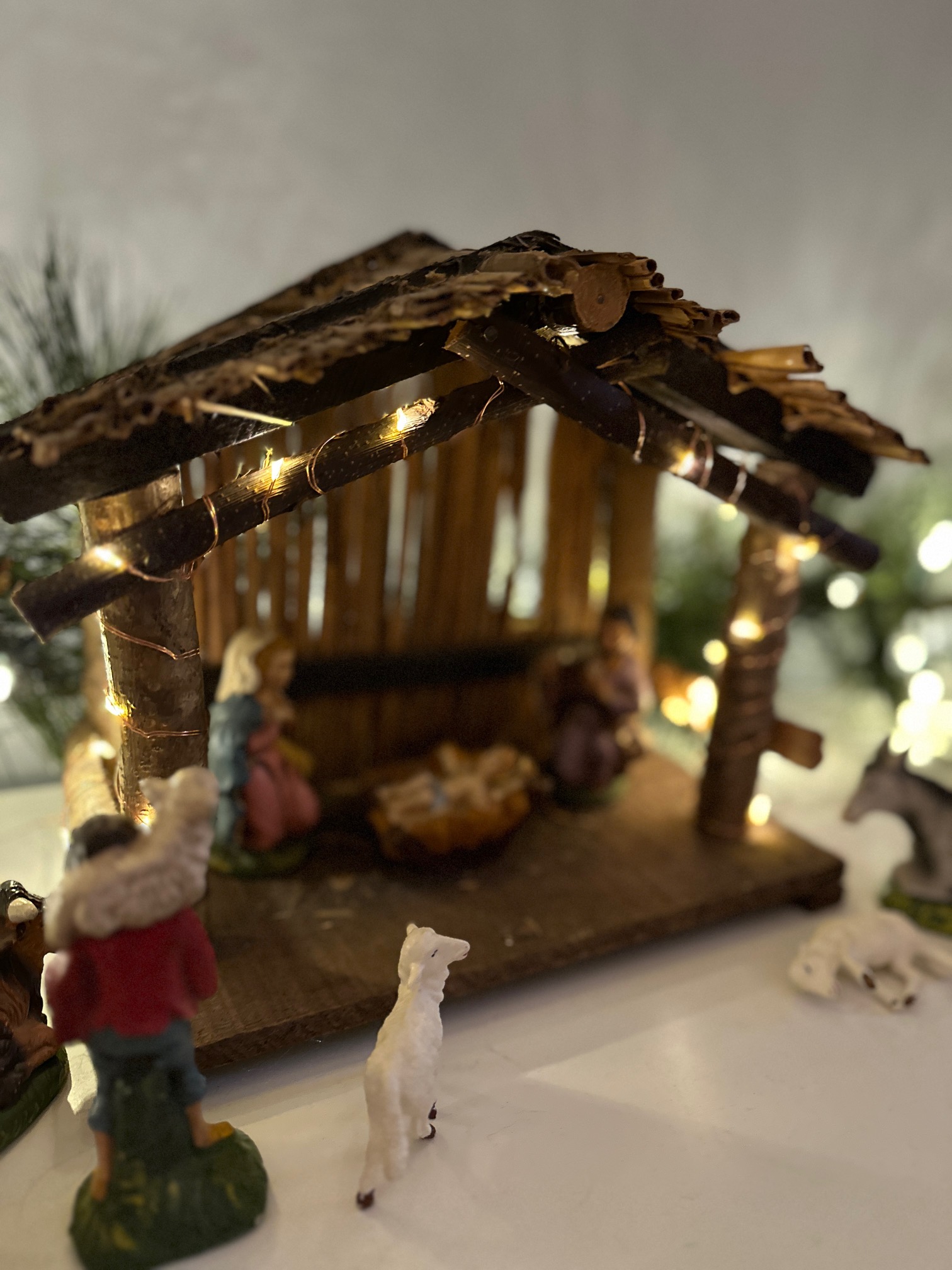
Waiting for Christmas
There is so much preparation for Christmas. We start in late fall—putting up Christmas decorations, planning events, purchasing gifts, pulling out our Christmas sweaters, wrapping, and all the other things. It’s months of preparation.
In the earlier church traditions, it was quite different. They started a tradition called Advent, which helped God’s people remember how they were waiting for the Messiah to come. The Christmas season was a stretch of waiting.
So, waiting vs. preparation… what is the difference?
With preparation, there are so many things to do. I have so many things to do. Along with our already full lives, there is even more to do, all focused on Christmas.
With waiting, there isn’t anything to do… you just wait.
For thousands of years, God’s people waited for Him to do what He promised in Genesis 3—to send the One who would crush the head of the serpent.
Over the centuries, God sent messages to remind His people of His promises. Scriptures like:
“For since the world began, no ear has heard and no eye has seen a God like you, who works for those who wait for him!”
—Isaiah 64:4 NLT“And it shall be said in that day, Lo, this is our God; we have waited for him, and he will save us: this is the LORD; we have waited for him, we will be glad and rejoice in his salvation.”
—Isaiah 25:9 KJV
He sent these messages to remind His people of His promise of a Messiah—a Savior He would send.
Can you imagine waiting for a promise to be fulfilled for your entire lifetime? Or for generations?
That is what God’s people did. It’s incredible faith and trust in His Word, even when they didn’t see it with their earthly eyes. Their faith and trust are described in the book of Hebrews:
“These were all commended for their faith, yet none of them received what had been promised.”
—Hebrews 11:39 NIV
Could it be that this Christmas season we shift our hearts and habits, deny some of the busyness, and spend time waiting and reflecting on God’s faithfulness to His promises?
He was faithful to His thousands-year-old promise to send the Messiah, and He is faithful to what He has said He will do in our lives.
Take time this Christmas season to simply wait on God. Put on some worship music, read the story of the incredible faith of the people in the original Christmas story, and take time to thank God for His incredible faithfulness to us humans. He loves us so much, and He doesn’t just say it—He showed it by sending His Son, Jesus the Christ, the Messiah.
Thief vs Shepherd part 3

Thief vs Shepherd part 3
Life is not a side topic in the Bible.
John 14:6: Jesus is the life.
Acts 5:20: The message of the church is “the message of life.”
Acts 3:15: God is the author of life.
Genesis 3:22: There was a tree of life in Eden.
Revelation 22: The river of life, the tree of life, the book of life.
Revelation 2:10: We receive the crown of life.
Life is everywhere in Scripture—and this life is always tied to our connection with God.
Which is why the thief wants to disconnect us.
So let’s bring this into our day to day life:
What might the thief try to use to steal from you in the next few weeks?
Busyness
Shame
Condemnation
Loneliness
Distraction
Resentment
Weariness
Those things can separate us from the awareness of God’s presence.
So what can we do?
1. Guard your relationship with Jesus.
Make space for Him in worship, devotional reading, prayer, attending church and moments of quiet with Him
2. Recategorize your moments.
Ask yourself in the day to day moments,
“Is this thief—or shepherd?”
What do I mean by this? Many times we see an inconvienience as something trying to steal from us, but what actually is happening is that our selfish nature is being challenged, and God is giving us an oppotunity for LIFE to flow through us. Those are shepherd moments. For example:
A family member needs to talk when you’re exhausted. Ask yourself, “Is this the thief stealing from me, or is this an opportunity for the Shepherd to have life flow through me into someone else in need?”
Your “me time”. These moments God wants to fill us with HIM, but many times the enemy uses these moments to fill us with things that will steal our relationship with God. When you have down time, watch how much you scroll on your phone or watch videos. These things don’t give us life, they steal from us.
A neighbor asking for help
Dogs needing to be walked
Preparing food
Serving at gatherings
Are these things stealing from you?
Or is God trying to bring life through them?
Often God wants to infuse us with His life in these moments, but we misinterpret what’s happening.
3. Savor the beautiful moments.
Slow down.
Look around.
If you’re a nature person, let the falling leaves or a sunset remind you that God made that moment for your heart.
If you love sports, or games, or good food with family…
Pause and smile.
Receive His love there.
As Jesus said to Mary:
You have chosen the good thing.
In our day to day life, let’s choose the good thing.
Let’s choose LIFE—a rich and satisfying life in Jesus.
Thief vs Shepherd part 2

Thief vs Shepherd part 2
Jesus the Gate and the Shepherd
Let’s keep reading—John 10:11–15:
Jesus now says, “I am the good shepherd.”
He lays down His life for His sheep.
A hired hand runs when the wolf comes, but the shepherd stays. Why?
Because the flock belongs to Him.
Wait—so is Jesus the gate or the shepherd?
He is both.
He is the entryway to God (the gate), and He is the one who continues to lead us into the goodness of God (the shepherd).
This reminds me of Psalm 23:
“The Lord is my Shepherd
I shall not want
He makes me lie down in green pastures
He leads me beside still waters
He restores my soul.”
Jesus gets us to God and keeps leading us back to God.
He leads us to life—true life.
As we move into the holiday season, this matters.
Because Jesus told us the enemy comes to steal, kill, and destroy.
But the first word Jesus uses is thief—someone who steals by stealth.
The Greek word kleptes means “a thief who steals secretly, by deception.”
The enemy’s tactics are often subtle.
Deception feels harmless.
It has a little truth wrapped in it.
It might even look good.
But the result is always loss.
The other words Jesus uses expand on the picture:
Kill (thuo): to sacrifice—something spiritual
Destroy (apollumi): complete ruin, cutting off entirely
The thief’s goal is not to sabotage your circumstances.
It’s to sabotage your connection with God.
I am not saying that the enemy comes to destroy the things and relationships in our life, HE DOES. But we must realize that this is not his primary directive. His primary directive is to steal, kill and destroy our RELATIONSHIP WITH GOD.
Jesus came to restore that connection.
He came to give abundant life—not the American dream, not a perfect house or bank account, but soul-restoring, God-filled life.
This abundant life is found only through the Gate (Jesus) and under the guidance of the Shepherd (Jesus).
Green pastures.
Still waters.
A restored soul.
This is LIFE.
Continues in the next post.
Thief vs Shepherd

Thief vs Shepherd
NLT:
“The thief’s purpose is to steal and kill and destroy. My purpose is to give them a rich and satisfying life.”
NASB:
“The thief comes only to steal and kill and destroy; I came that they may have life, and have it abundantly.”KJV:
“The thief does not come except to steal, and to kill, and to destroy. I have come that they may have life, and that they may have it more abundantly.”
In these scriptures, Jesus is giving us a contrast:
The thief’s purpose vs. Jesus’s purpose.
-
Thief: steal, kill, destroy
-
Jesus: life—rich, satisfying, abundant
Here’s an interesting question:
Why does Jesus call him a thief instead of a murderer or destroyer?
To understand that, let’s look at the context: John 10:1–10.
Jesus explains that anyone who sneaks into the sheepfold is a thief and a robber, but the true shepherd enters through the gate. The sheep recognize the shepherd’s voice. They follow him because they know him. They run from a stranger because they don’t.
The people didn’t understand Jesus’ illustration, so He clarified:
-
He is the gate.
-
He is the way to God.
-
Through Him, the sheep find safety, freedom, and good pasture.
And then Jesus states the famous contrast again:
The thief’s purpose is to steal and kill and destroy. My purpose is to give life.
Those who came before Jesus were thieves and robbers. What did they steal?
Not cars, not money, not comfort.
They stole truth.
They stole relationship with God.
The sheep were being misled—not by the shepherd—and their connection with God was being taken from them.
Continues in the next post.
God’s place in my heart

God’s place in my heart
“Dear children, keep away from anything that might take God’s place in your hearts.”
— 1 John 5:21 (NLT)
What does it mean for something to take God’s place in my heart?
Jesus gave us some insight in Matthew 22:37 (CSB) when He restated the command from Deuteronomy 6:5:
“Love the Lord your God with all your heart, with all your soul, and with all your mind.”
God wants our hearts to be filled with Him — His presence, His peace, His love, His joy – in other words, filled with Him.
But the truth is, our hearts can be filled with many other things.
They can be full of bitterness, anger, jealousy, greed, or pride.
Or full of ourselves — our own desires, ambitions, and distractions.
Or, by His grace, our hearts can be full of God — full of His love, peace, and joy.
In some Bible translations, 1 John 5:21 says, “Keep yourselves from idols.”
We may think, I don’t have idols — I don’t bow down to statues!
But if an idol is anything that takes God’s place in our hearts, then the definition suddenly becomes much broader.
An idol can be anything that occupies the space in our hearts meant for God.
It could be something that looks good — even wonderful things like relationships, hobbies, work, or ministry. Or maybe something more subtle, like our phones, entertainment, or even comfort habits.
How do we know when something has taken God’s place in our hearts?
Ask yourself:
Do I go to this thing for what God wants to provide for me?When I’m stressed or weary, where do I turn first for comfort or peace?
Do I pour another cup of coffee, reach for chocolate, scroll my phone, or distract myself with something else — before I pray?
These things aren’t necessarily bad on their own. But when they become what we turn to instead of God, they quietly begin to take His place. That’s when they become idols.
Wondering if something’s an idol?
Try setting it aside for a few days.
If that feels nearly impossible — if it stirs restlessness or anxiety — it may have too much of your heart.
What’s the next step?
When you feel that pull toward something else for comfort or escape — pause.
Take a breath. Talk to God instead. Tell Him what’s weighing on you. Ask Him to fill that space with His peace.
The word repent simply means to turn around.
Turn from what’s been stealing your attention and turn back to Him.
Make room for God again.
Take a few quiet minutes in the morning, a moment at lunch, or a peaceful time before bed to simply be with Him.
Give Him His rightful place — the center of your heart.
Dead or Alive?

Dead or Alive?
I’m sitting beside a quiet creek on this crisp October morning, watching the leaves drift down from the trees and land softly on the water’s surface. The breeze stirs them, and they begin to float downstream—carried by the current, with no effort of their own.
Every so often, I notice a flicker beneath the clear water—a fish darting upstream or a little crawdad moving against the flow. While the dead leaves are swept along effortlessly, these living creatures push and fight against the current. Why? They have life. They have direction.
It makes me think: in our own lives, are we alive and moving with purpose? Or have we grown weary and started drifting—just floating along with whatever current our lives provide? It’s easy to be carried away by popular thought, pressures, or the chaos of daily life.
But Jesus brings life.
If you’ve been feeling pushed around by fear, anxiety, or the chaos around or inside you, it might be time to ask Him to breathe life back into you—to awaken your desire to stand firm and swim against the current.
Romans 12:2 (Phillips Translation) says:
“Don’t let the world around you squeeze you into its own mold, but let God remold your minds from within.”
There are strong currents that want to shape us, pull us, and push us downstream. But God gives new life—He gives us the strength and desire to resist and move in His direction.
So how do we start?
First, realize if you’ve been drifting. Acknowledge that you’ve been letting other forces carry you away. Then turn around—that’s what repentance means. It’s choosing to go a different way.
Ephesians 6:13 tells us to stand with all kinds of fighting gear on. That means reawakening the muscles of faith that may have grown weak. Pray. Seek God’s help. Gather with other believers. Read and meditate on His Words. Ask for His grace and strength to take small steps forward.
As you do, you’ll find that the more you push against the current, the stronger you become. Because you’re no longer drifting—you’re alive.
Psalm 46:1

God is our refuge and strength, a very present help in trouble.
— Psalm 46:1
Read that passage slowly. Let each word sink in.
GOD —
the mighty, powerful, just, loving, and kind Creator — is our refuge and strength, a very present help in trouble.
God is our REFUGE —
our safe place. The place we run to when life hits hard. He’s where we hide when the storm rages, and the One who holds us steady when everything feels uncertain.
God is our refuge and STRENGTH —
the mighty One who gives us power when we’ve reached the end of ourselves. He’s the One who lifts us up so we can run and not grow weary, walk and not faint. He is our strength — a very present help in trouble.
God is our refuge and strength, a VERY…
In Hebrew, this word acts like an exclamation point — an intensifier. Strong’s describes it with words like diligently, especially, exceedingly, greatly, louder and louder. God isn’t just present — He is very present — fully engaged, completely aware, and actively working on our behalf.
God is our refuge and strength, a very PRESENT…
He’s not far away. Not apathetic. Not too busy. He’s right here — near to the brokenhearted, walking beside us in every trial.
God is our refuge and strength, a very present HELP…
The Hebrew word for “help” means assistance, support, or aid. In Scripture, it’s almost always used of God helping His people. But sometimes it’s used to show when His people turned elsewhere for help — to human alliances or other sources — instead of to Him. God saw that as a betrayal of trust.
So when trouble comes, where do we turn first?
To our insight? Our ideas? The internet? AI? Other people?
These can all be resources, but they are not the Source. God is our true help — and He may use these things, but the strength and wisdom come from Him alone.
God is our refuge and strength, a very present help in TROUBLE.
This Hebrew word carries the meanings of adversity, affliction, anguish, distress, and tribulation.
When you face adversity, affliction, or distress — God wants you to come to Him first.
Yes, we live in an age overflowing with information and resources. That can be a blessing, but it can also be a distraction. God uses many tools to bring help, but He alone is the Source of life and strength.
So today, pause and ask yourself:
What are you facing that you need to go to God about?
He is near. He is strong. He is your refuge and your help — right now, in whatever you’re walking through.
What Do I Do When I Can’t Stop Crying?

What do I do when can’t I stop crying after I’ve prayed?
Psalm 126:5 says, “Those who plant with tears will harvest with shouts of joy. They weep as they go to plant their seed, but they sing as they return to harvest.”
I’ve often wondered—why do they weep? Why would someone cry as they plant?
It’s because there has been a real loss. Real regrets. This psalm was written after the exile, when God’s people returned to a broken Jerusalem. Their beloved city was in ruins. The temple—the place where they had once met with God—lay in rubble. The grief was deep, and the pain was real.
Sometimes loss comes into our lives the same way. Maybe it’s because of our own choices, or maybe it’s because of someone else’s actions. Either way, the tears are real. And when the grief feels overwhelming, we ask: What do I do next?
The psalmist gives us the answer: we plant. Even through the tears, we plant.
We plant seeds of surrender: Lord, I am Yours. Even when I don’t understand, I choose to belong to You.
We plant seeds of faith: Lord, You love me. You see me. You tenderly care for me. Show me the promise from Your Word that I can hold onto today.
And we plant seeds of love: Lord, open my eyes to someone who needs encouragement, prayer, or kindness. Use me to help draw them closer to You.
Then go and give encouragement, pray for someone, give a gift, bake something for someone – just give.
Planting in tears is not easy. But Scripture assures us that those very seeds—watered by our grief—will one day bring forth a harvest of joy.
So today, wherever you are, whatever you’re feeling—plant. Even if the tears fall as you do, keep planting. For God promises that joy is coming.
Here’s something to consider as you go about your day:
Are you feeling sad? What are you feeling sad about?
Ask God what seeds you can sow as you walk through this season.
Why Isn’t Anything Happening?

Why isn’t anything happening?
“Those who plant in tears will harvest with shouts of joy.
They weep as they go to plant their seed,
but they sing as they return with the harvest.”
—Psalm 126:5–6
Have you ever prayed, obeyed, planted the right “seeds,” and then asked: Why isn’t anything happening?
Waiting for growth is one of the hardest parts of faith. Impatience makes us want to dig up the seed to check on it, or quit watering and tending it because “nothing is working.” But true patience is different. Patience means letting go of control and trusting that growth is happening beneath the surface—even when we can’t see it.
When you plant a seed in the ground, you don’t control how fast it sprouts. You water, you give it sunlight, and then you wait. Apple trees can take up to seven years before they bear fruit. Blueberries can take four. Growth takes time. But, as we plant seeds, we follow the instructions on the seed packet and then will wait. This is trust and faith in the supplier of the seeds. In the same way, we can trust God, the creator of all with our seeds. We listen and follow His instructions.
Our spiritual life works the same way. We plant seeds of faith, obedience, love, and generosity—and then we wait, trusting God to bring the harvest. Hebrews 6:12 reminds us to imitate those who “through faith and patience inherit the promises.”
In The Princess Bride, the old man says, “If you rush a miracle, you get rotten miracles.” The same is true of the work God is doing in us. Rushing ruins the fruit. But waiting in faith brings a harvest of joy.
So keep planting, even through tears. Keep watering with prayer and feeding your spirit with God’s Word. And trust Him. The harvest will come—in His time.
Prayer: Lord, help me trust You in the waiting. Teach me patience. Remind me that growth is happening even when I can’t see it. I place the seeds I’ve planted in Your hands, believing You will bring the harvest in Your perfect time.